

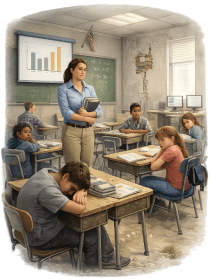
Even with the numerous new developments in the educational system, public schools continue to face serious problems. Most problems in public schools are due to difficulties encountered by teachers and students in the classroom. For example, public schools in India face several problems like inadequate resources, bullying, low quality, and a lack of infrastructure.
Studies have shown that these problems reduce the creative thinking skills of students. SR Journal (The Social Research Journal) examines how these issues affect students’ ability to learn. Common issues in public schools prevent equal access to education and quality education.
In developing countries like India, the quality of education and training remains very poor. Language barriers, poverty, inadequate infrastructure, and a lack of resources are some of the issues that affect the quality of education.
Students’ mental health could also be affected by stress, academic pressure, bullying, neglect, and other school-related issues. In recent times, digital classrooms and digital literacy have been introduced to solve these problems. Let’s see some of the major problems faced in public schools.
School Violence
One major problem faced by public schools in recent years is school violence. It reduces access to quality education and effective education. Violence in schools could range from abuse, disputes, harassment, and arguments.
Violence in school reduces the safety and security protocols of schools as well as children’s mental health. The fear of getting bullied prevents students from going to school. Some students may also find it difficult to relate to their peers and even teachers.
Lack of Participation
Another major problem in public schools is students’ lack of participation. It could be a result of mood disorders, shyness, and low self-esteem. All of this could impact learning outcomes and make students less excited about going to school.
Teachers may find it difficult to create a positive learning environment because different students are not willing to participate in class activities and learning processes.
Low Teacher-Student Ratio
In many developing countries, there is an improper teacher-student ratio. This makes it difficult for schools to effectively manage each student when the ratio is out of balance.
In most schools, there is one teacher for every 30-40 pupils. This negatively impacts the teacher-student relationship, which makes learning difficult for students. Teachers also find it difficult to participate in the teaching and learning process more effectively.
Discipline Issues
Discipline problems are one of the major issues of public schools, a hindrance to the students’ performance. Some students behave badly in school and act strangely due to a lack of classroom discipline.
Teachers may also find it difficult to manage the entire classroom for students. Schools should prioritize teaching students appropriate behavior and classroom discipline to make the educational system effective.
Absence of Funding
Many government schools, especially those in rural areas, find it difficult to get adequate funding. This makes it difficult for them to operate a school. This makes it difficult to obtain the best resources.
It is difficult to handle all of the expenses, like library, student development, teacher salaries, and repayment due to a lack of funding.
Inadequate Structure
Many Indian schools don’t have enough facilities to teach students. As a result, some students lose interest in learning due to inadequate infrastructure.
One of the major causes of inadequate infrastructure is inadequate funding. With adequate funding, school administrators can invest more in infrastructure and better facilities.
How to Fix These Problems in Public Schools
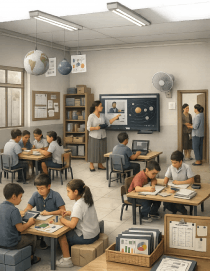
Problems with public schools affect the educational system in developing countries. To fix these problems, schools have to implement strategies that help improve learning outcomes. Here are a few strategies that could help fix problems in schools:
- Incorporating technology into learning processes. For example, virtual learning platforms and digital classrooms could help improve learning.
- New teaching methods can be used in classrooms to make students more attentive and interested in school.
- Parent-teacher communication helps monitor students’ performance in school. Schools can organise meetings that allow parents and teachers to discuss students’ strengths and weaknesses.
Conclusion
The major problems faced in public schools are centred around disturbances in learning environments. Students and teachers usually find it difficult to participate in learning processes in this environment due to problems like bullying, school violence, inadequate funding, and lack of infrastructure.
Schools can solve these problems by implementing ideas such as new teaching strategies, technology integration, teacher-parent communication, extracurricular activities, and intensive teacher training.