

Major crises tend to leave marks that last well beyond the immediate shock. Wars, financial crashes, pandemics, and energy shortages all force governments to rethink how money is raised and spent. Tax systems sit at the centre of that process. When public finances are stretched and expectations of the state grow, taxes often change in ways that affect wages, household bills, and access to public services. Understanding those shifts helps explain who ends up paying more, who is protected, and who benefits over time.
Why Crises Put Pressure on Tax Systems
Crises open up instant gratings between the ideal spending needs of the government and taxes it already receives. The resultant astronomic sudden support the emergency supplement for healthcare expenditures, business bailouts, or early recovery efforts that overshoot by miles the normal course of budget processes; moneylender finance could be used to cover a part of that rift, but very rarely completely. The theft in the time ahead and stabilizing the public fiscals also signal longer-term public pronouncement on matters such as taxes or checks and balances.
Rising Spending and the Search for Revenue
After a crisis, governments often face a structural increase in spending. Health systems may need permanent expansion, welfare programmes can become broader, and public infrastructure may require renewed investment. Research shows that when spending rises for long periods, temporary taxes tend to become permanent features of the system.
This is where wage-based taxes come into focus. Income tax thresholds may be frozen rather than raised with inflation, meaning more people pay higher rates over time even if their real earnings have not grown. This approach raises revenue quietly and spreads the burden across a wide group of workers, making it politically easier to sustain.
Debt, Deficits, and Long-Term Adjustment
Borrowing usually increases sharply during a crisis, but high debt levels change how governments think about taxation later. Servicing debt requires predictable income, which favours stable taxes like income tax, national insurance contributions, and consumption taxes.
Tax researchers track how deficit reduction is phased in. Instead of sharp tax hikes, governments often rely on gradual changes such as reduced allowances or delayed uprating of thresholds. These measures are less visible but can have a lasting effect on household finances, particularly for middle earners whose wages rise slowly.
Wages, Bills, and Everyday Costs
Taxes influence daily life most clearly through earnings and living costs. Looking at wages and bills allows researchers to see how tax changes are distributed across society and how they interact with inflation and pay growth.
Income Tax and Take-Home Pay
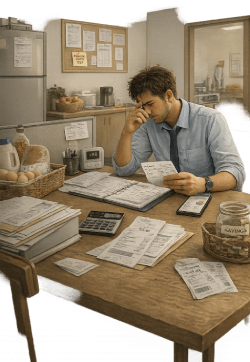
After crises, income tax systems often become more reliant on a larger share of the workforce contributing at higher effective rates. Even without changing headline rates, governments may adjust bands or allowances in ways that reduce take-home pay.
Research using wage data shows that lower and middle earners are particularly sensitive to these changes. When wages rise slowly but tax thresholds remain fixed, households feel poorer despite nominal pay increases. Higher earners may also pay more in absolute terms, but the relative impact on living standards is often smaller.
Indirect Taxes and Household Bills
Crises can also lead to greater use of indirect taxes, such as VAT or environmental levies. These appear in everyday bills rather than payslips, which can make them feel less like taxes and more like unavoidable costs.
Studies of household spending show that indirect taxes tend to take up a larger share of income for lower-income households. When energy, fuel, or food costs rise alongside these taxes, the pressure compounds. This is why many post-crisis tax systems include targeted reliefs or rebates to soften the impact.
Public Services and Who Benefits
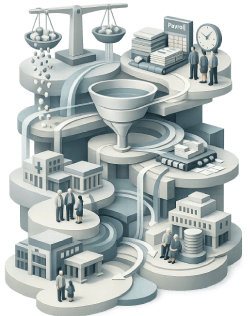
Taxes are only one side of the equation. What matters just as much is how the money is used. After a crisis, public services often expand or change shape, altering who benefits from the tax system overall.
Crises tend to highlight shared risks, particularly around health and income security. Increased funding for healthcare and welfare can disproportionately benefit lower-income households, older people, and those with unstable work.
Middle earners often feel the most squeezed after a crisis. They may see higher deductions from wages while also facing rising bills, yet feel less direct benefit from targeted support programmes.
When Recovery Rewrites the Rules
In the aftermath of any crisis, tax systems rarely remain unchanged. As seen in the era of wages, household bills, and public services, tax studies from SR Journal show that minor alterations have encompassed reshaping the extent to which one group of taxpayers pays and another benefits over time. However, the ultimate beneficiaries generally are the higher income groups, though it sectionly hinges upon how revenues originate and flow. In the post-crisis world, tax systems will determine their longevity not just on the basis of the numbers alone, but on the balance that taxpayers seem to feel still exists between contributing and benefitting.